Attic Mold Remediation in Kirkwood, CA
The roofer came down from the ice dam and said the sheathing is gray
You called a roofer about the ice at the eave and the drip in the bedroom. He pulled the hatch, shined a light across the underside of the roof deck, and told you the plywood on the north slope is stained gray-black from the eave to the ridge. The nails are rusted and beaded with water. Then he said the roof itself is fine.
He is right about both. The ice dam brought you up there, but the staining on the sheathing has been growing on its own for winters. When you call, we pass your description to an independent provider who works the Highway 88 and Highway 50 country, and that is the whole of our role.
Following the warm air from the bath fan to the cold side of the roof deck
In a snow-country attic the moisture almost never comes through the roof. It rises from the house. A bath fan that vents into the insulation instead of outdoors, a dryer duct that came apart, can lights and a hatch that leak heated air: each one pushes warm, damp air up under a roof deck chilled by three feet of snow.
That air condenses on the cold plywood night after night, on the side nobody sees. The crew meters the sheathing, follows the staining to its darkest spot, and usually finds the fan duct ending right there.
Leave the hatch closed and stop running the fan into the attic tonight
Do not go up to look for yourself. Walking on the insulation stirs what is growing above it and carries it down the hatch into the hallway. Close the hatch, tape the edges if it leaks air, and turn off the bath fan until someone confirms where it ends.
Photograph the ice at the eave and the drip inside while they are still there. Ask the roofer for his photos of the deck, since the adjuster will want them. Then call, and mention the bath fan and the age of the roof.
Sheathing cleaned where it sits, insulation bagged and replaced
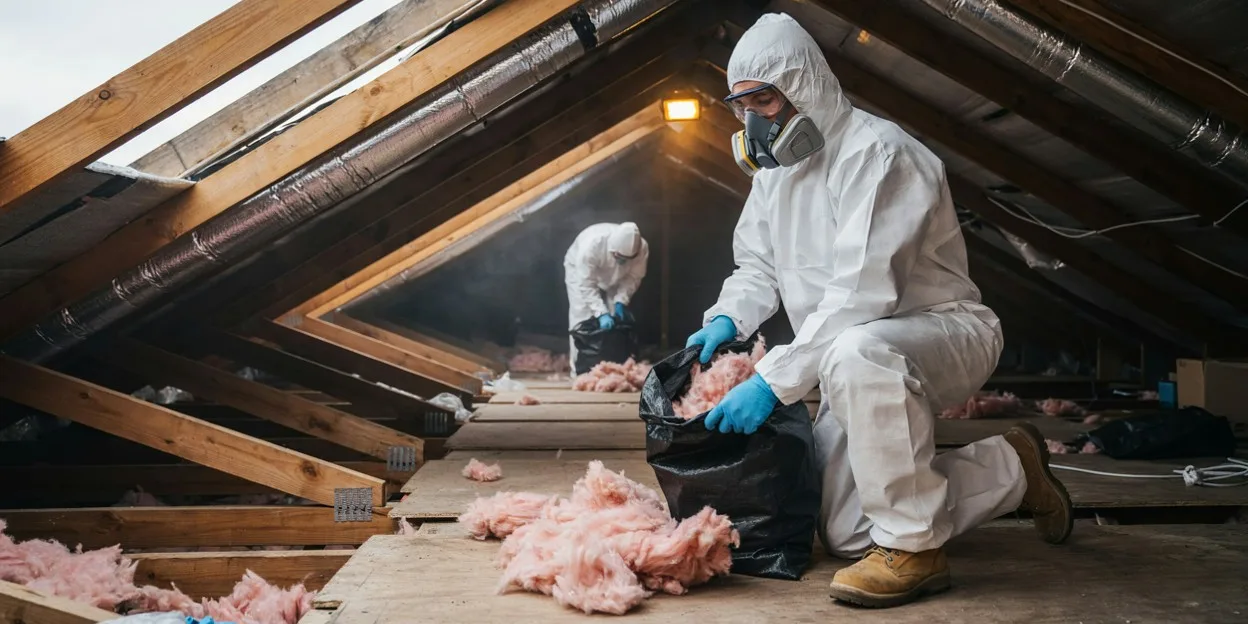
Roof sheathing stays. Pulling it means pulling the roof, and the plywood is solid wood that cleans in place. The crew seals the hatch, runs negative air, and works the deck with HEPA vacuums, scrubbing, and in heavier cases a soda or dry-ice blast that strips the staining without soaking the wood. Rafters get the same treatment.
The insulation comes out. Blown-in fiberglass or cellulose that took a season of condensation and fan exhaust is bagged and removed. Before new insulation goes in, the fan duct gets run to a roof or gable vent, the top plates and can lights get air-sealed, and the hatch gets a gasket. Where the attic drip stained the bedroom ceiling below, mold removal handles that drywall, and if the furnace or its ducts share the attic, HVAC mold cleaning is added to the scope.
Snow-load roofs at Kirkwood and vented attics in Cameron Park
Kirkwood roofs are built for hundreds of inches of snow, and they hold a snow blanket over the attic from December to April. Under that blanket the deck cannot shed moisture, so any warm air that leaks up from the unit ends up on the plywood. The older wood-frame condo rows from the resort's first decades and the newer village lodges both see it.
Down at Cameron Park or Folsom the attic is vented and the roof is bare most of the year, so the deck dries between storms. Staining there usually traces to a bath fan dumped into the attic of a two-story house. Rerouting a fan and replacing insulation can be a permit question; the provider checks with the county or with Folsom first. California has no mold license, so the contractor working your attic carries a standard state license.
Tell us what the roofer saw
The slope, the color, and whether a fan duct ends up there are the three details that shape the scope. Call (209) 764-2249 and describe the deck the way the roofer described it to you.